

Human-in-the-Loop AI: Why Approvals Still Matter
Balancing efficiency, risk, and accountability in AI-driven workflows.
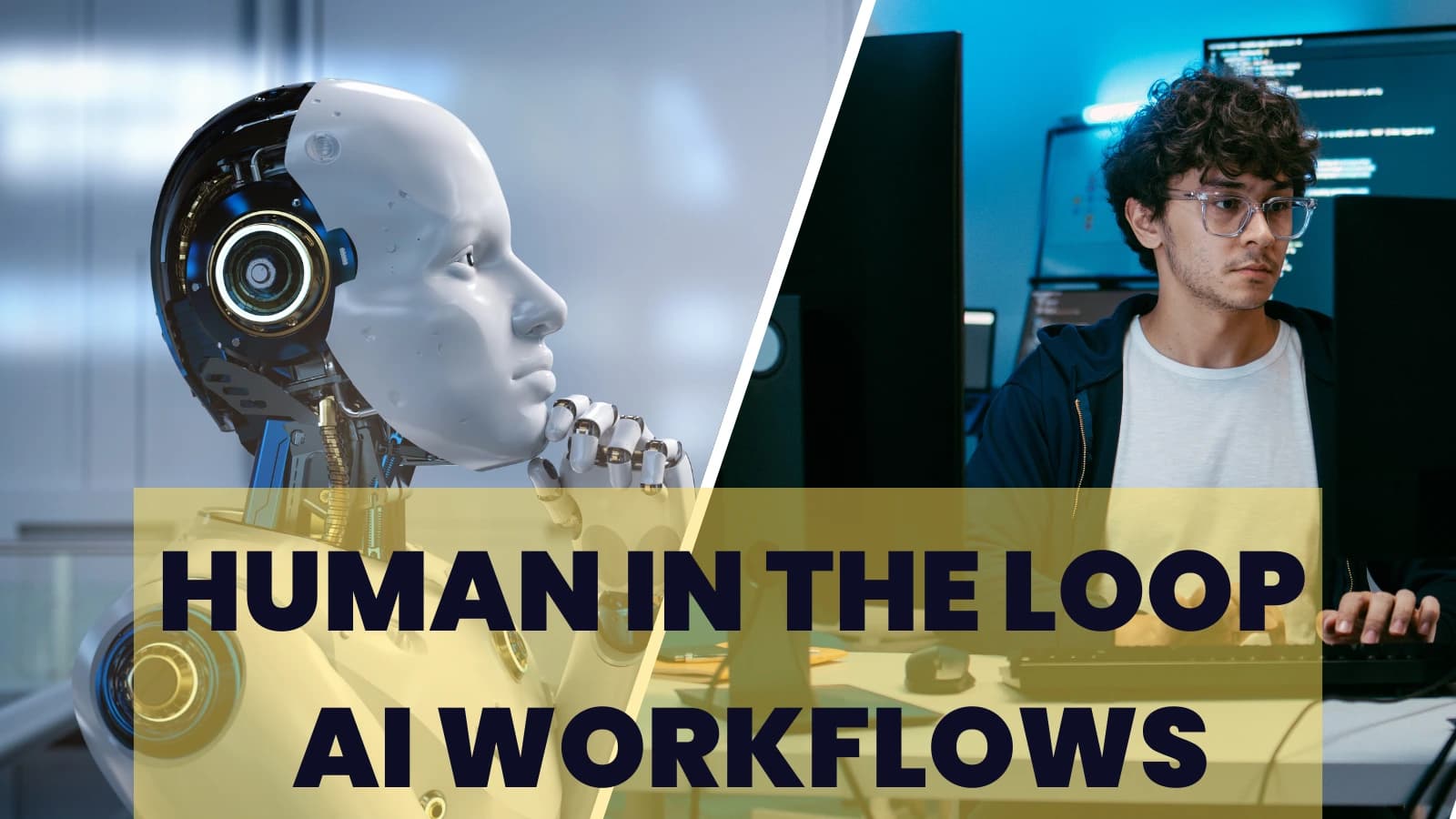
The Temptation of Full Automation
There is a growing belief in boardrooms that if AI can make decisions, human intervention can be eliminated entirely.
The logic is compelling—reduce cost, increase speed, and scale operations without proportional headcount growth.
However, this assumption overlooks a critical reality: not all decisions carry the same level of risk.
Human-in-the-loop is not a temporary compromise. It is a design principle for operating AI safely at scale.
The Investor Lens: Efficiency vs Risk
From an investor perspective, AI is often evaluated as a lever for margin expansion, cost reduction, and operational scalability.
While AI workflows can significantly reduce manual effort, the assumption that this extends to full autonomy is flawed.
The real equation includes risk, which does not scale linearly with automation.
A single incorrect decision can lead to financial loss, regulatory exposure, or reputational damage.
For leadership, the question is not how much manpower can be removed, but where human intervention can be reduced without increasing enterprise risk.
Why Fully Autonomous Workflows Are Harder Than They Appear
Many workflows appear simple on the surface but become complex when exposed to real-world variability.
Data is often incomplete, ambiguous, or inconsistent, making fully automated decisions unreliable in edge cases.
AI systems excel at pattern recognition but can misinterpret context or fail silently in unusual scenarios.
Unlike humans, AI systems do not inherently understand consequences or accountability.
This is why organizations that attempt full autonomy often reintroduce human checkpoints later.
What Human-in-the-Loop Actually Means
Human-in-the-loop is often misunderstood as manual approval slowing down automation.
In reality, it is about placing human judgment precisely where it is needed.
Three common models exist: human-in-the-loop for approvals, human-on-the-loop for supervision, and fully autonomous workflows for low-risk tasks.
The challenge is not choosing one model, but applying the right model to the right workflow.
Where Approvals Still Matter Most
Approvals remain critical in workflows with material financial impact such as payments, procurement, and pricing decisions.
They are essential in regulatory and compliance workflows where accountability cannot be delegated to AI systems.
Customer-facing decisions that affect trust and experience also require human oversight.
Ambiguous or incomplete data scenarios benefit from human judgment over automated inference.
Strategic decisions such as hiring, vendor selection, or investments should not be fully automated.
The Real Benefit: Controlled Scaling
Human-in-the-loop does not slow down systems when designed correctly—it enables safe scaling.
Organizations can automate the majority of routine decisions while maintaining control over critical ones.
This approach reduces risk while improving efficiency and decision consistency.
Over time, as confidence in AI increases, workflows can evolve from approval-based to supervisory models.
Designing HITL Workflows for Real Operations
Effective HITL workflows define clear decision thresholds for automation and human review.
They incorporate exception handling mechanisms to manage edge cases.
Auditability is critical to ensure decisions can be traced and explained.
Feedback loops must exist so that human corrections improve system performance over time.
The balance between speed and control should be tailored to each workflow’s risk profile.
AI Does Not Remove Responsibility
AI does not eliminate accountability—it redistributes it across the organization.
When AI makes decisions, the organization remains responsible for outcomes.
Leadership must ensure governance structures are in place to manage this responsibility.
Fully autonomous operations remain limited in most industries due to regulatory and operational constraints.
Approvals Are Control Points, Not Inefficiencies
Human-in-the-loop is often seen as a limitation, but it is what enables AI to function in real-world operations.
Approvals act as control points that ensure risk is managed and decisions remain accountable.
The goal is not to eliminate humans from workflows, but to involve them only where they add real value.
Organizations that strike this balance will achieve both efficiency and control in AI-driven operations.
Next Step
Stay Updated
Request a consultation to design AI systems for your business.